
Book Appointment Now
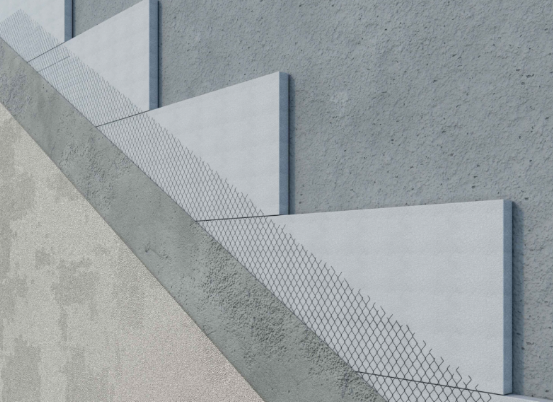
How EPS Panels Are Reshaping the Way We Build
Walk onto most modern building sites, and you’ll notice something: fewer trades standing around waiting for one job to finish before the next can start. That shift owes a lot to EPS panels, which fold insulation and structural backing into one component instead of leaving them as separate stages. Anyone who’s watched a cavity wall go up, layer by layer, knows how many places things can go wrong between the blockwork and the render. Panels sidestep a chunk of that sequencing. The interesting part isn’t the material itself so much as what it removes: waiting, snagging, and the small errors that creep in when several trades touch the same wall.
A Smarter Way to Insulate
Most heat doesn’t escape through the flat middle of a wall. It escapes at junctions: where a window meets a reveal, where a roof meets a wall plate, where two panels butt together slightly off. Continuous insulation solves the easy part automatically, but junctions still need care, usually with tape or sealant applied by hand. A panel system reduces these weak points compared with a stud wall stuffed with mineral wool, but doesn’t eliminate them. Anyone specifying panels for thermal performance should ask installers how they handle joints, not just what the panel’s rated for.
Lightweight Yet Remarkably Strong
Weight matters most in one specific scenario: altering an existing building where the foundation wasn’t designed with extra load in mind. New-build foundations get sized around whatever’s going on top, so lightweight materials there are a convenience rather than a necessity. On a renovation, swapping heavy blockwork for a lighter panel can mean avoiding underpinning altogether. That’s a genuinely useful distinction, and it’s why architects working on period properties or loft conversions reach for panels more readily than those planning a straightforward new house.
Energy Efficiency Built In
Eps panels perform near to their rated numbers only when the installer seals joints well; a badly taped seam undoes a substantial portion of the gain no matter how excellent the core material is. This is essential emphasising simply since marketing literature tends to emphasise on the panel’s inherent qualities, glossing over how much on-site craftsmanship influences the real-world result. Ask a provider how panels work when put incorrectly, not only when placed well.
Quick and Simple to Install
The speed advantage is real, but concentrated in roof work and external envelopes, where weather exposure makes every extra day a genuine risk. Internal partitions gain far less from prefabrication, since there’s no weather to race against. Contractors who’ve used panels on both will usually say the same thing: it’s the roof and the external skin where saved time actually shows up in the programme.
An Environmentally Conscious Choice
Since Eps panels are made of oil-based polystyrene, the term “green” should be used with caution. In-use energy savings and decreased transport weight, which both balance the manufacturing footprint over the course of a building’s life, are where they really get credit. Although recyclability is theoretically possible, the practicalities of gathering and repurposing leftovers locally are inconsistent, so consider that assertion to be aspirational rather than certain. Panels work especially well in commercial buildings, sheds, and agricultural structures where a clad or rendered finish is already anticipated. Since the finish must sit over the panel rather than be the panel itself, it is more difficult to sell when exposed masonry or a brick face is included in the design brief.
Durability That Lasts
The EPS core doesn’t rot, but it’s rarely what fails first. Facing materials, whether render, timber, or steel skin, take the weather and the mechanical knocks, and that’s usually where problems start. A panel is only as durable as its outer layer and the detailing around openings, so durability claims about the core shouldn’t be read as claims about the whole assembly.
Conclusion
All of this does not make panels a universal solution; rather, when correctly understood, EPS panels address particular difficulties that may be identified, such as sequencing on site, foundation loading during restorations, and weather risk during roofing. It is just as enlightening to determine where they fall short as it is to determine where they thrive, and a builder who is familiar with both sides would specify them for the appropriate reasons rather than out of habit.