Book Appointment Now
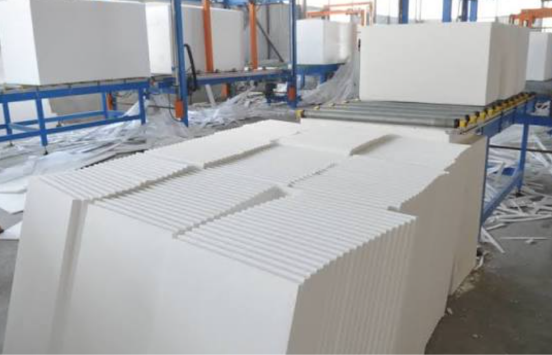
Polystyrene Products Supplier: Why Choosing the Right Partner Transforms Packaging Success
Nobody notices good packaging. That’s the strange part of this business. A shipment arrives intact, nobody thinks twice, the product gets unboxed and forgotten. But a dented corner, a warm parcel that should have stayed cold, a crushed edge on something fragile — that’s when people start asking questions. A polystyrene products supplier sits quietly behind every one of those outcomes, rarely praised, often blamed. Buyers who shop this decision on price alone tend to learn, eventually and expensively, that the material was never really the issue. The supplier was.
The Material Nobody Questions
People assume polystyrene sheets are basically the same everywhere. They’re not, and the difference isn’t visible on a shelf. Cell structure. Bead fusion. Moisture trapped during processing before the material was ever moulded into shape. A tray can look flawless sitting in a warehouse and still fail under vibration three days later, somewhere on a truck, because the fusion between beads was never quite right. Ask a supplier how their material is processed and watch how they answer. Vague responses usually mean nobody checked closely enough, and that gap shows up later, far from where anyone can fix it.
Batch Drift Is the Real Enemy
The first delivery is never the problem. It’s the one after that, and the one after that, when small shifts creep in without anyone noticing. Machines drift. Shifts change hands. Upstream material lots vary in ways nobody upstream bothers to flag. A supplier worth keeping catches that drift internally, quietly, before a customer ever has to complain about crushed stock arriving on a dock. So ask directly — how do deviations get caught? Not whether quality checks exist on paper, because everyone claims that. Ask what actually happens when something slips.
Customisation Is Where Suppliers Reveal Themselves
Generic packaging fits almost nothing well. Electronics need cut-outs tight enough to stop micro-movement but gentle enough not to pinch a connector. Perishable goods need insulation built around how they actually travel, not a rough guess pulled from a catalogue. A genuinely capable polystyrene products supplier pushes back. They ask uncomfortable questions about transit conditions before recommending a mould, rather than nodding along to whatever spec lands on their desk. Suppliers who accept every brief without friction usually aren’t solving problems — they’re just passing them further down the chain.
Recyclability Claims Deserve Scrutiny
“Recyclable” sounds reassuring right up until you ask what happens after collection. Plenty of regions simply lack the infrastructure to process it, so the material gets landfilled anyway, label or no label. A supplier who explains the real disposal pathway, honestly, without falling back on marketing language, is worth far more than one reciting sustainability buzzwords. Where does it actually go? Who processes it? Does that infrastructure even exist near your operation? Vague answers here usually mean nobody ever tested the claim against reality.
Lead Times Hide the Real Story
A quoted lead time tells you almost nothing about what happens when demand suddenly spikes. Suppliers holding genuine buffer stock behave completely differently from those simply promising fast turnaround on paper. That difference only becomes visible during a crunch — exactly the wrong moment to discover it firsthand. Ask how a recent surge in demand was handled. What broke. What didn’t. The answer says more than any delivery promise ever could.
Quality Checks That Actually Catch Problems
Measuring density is easy. Measuring what survives real shipping stress is much harder, and far more revealing. Compression under sustained load, behaviour across temperature swings, resistance to repeated handling — these matter more than a single clean reading taken fresh off the production line. Suppliers who simulate real transit conditions catch failures that basic checks miss entirely. Ask what testing looks like beyond the obvious basics, because that answer separates suppliers who prevent problems from ones who simply document them afterward.
Cross-Industry Experience Signals Depth
A supplier working in only one sector often lacks the reference points needed for unusual problems. Someone who has handled medical packaging understands sterility concerns food packaging never touches. Someone who has worked with electronics understands static sensitivity that construction insulation ignores entirely. That breadth shows in the questions a supplier asks before quoting, not in a glossy brochure.
Conclusion
The real cost of a weak polystyrene products supplier rarely shows up on an invoice. It shows up in damaged goods, missed shipments, and customers who quietly stop reordering without ever explaining why. Consistency, honest sustainability answers, genuine buffer capacity, testing that mirrors real transit stress — these matter more than any polished pitch. Ask sharper questions before signing anything. The businesses that get this right rarely talk about it much. Their operations just run noticeably smoother, and that’s usually the only proof anyone needs.